
Successful machine vision projects usually begin with a clear definition of the inspection—not with a camera model. The better the application is described up front, the more useful a proof of concept can be.
1. Write the decision in one sentence
Start with the decision the system must make: verify a label, read a code, confirm assembly, measure a feature or identify a defect. A precise pass/fail statement keeps the project centered on a production outcome.
2. Collect representative good and bad parts
A small set of ideal samples rarely shows the real application. Include normal color, texture and position variation, along with the failure modes the system must detect. Representative samples help expose ambiguity before equipment is selected.
3. Describe the scene around the part
Lighting, distance, motion and presentation can matter as much as image resolution. Document the working distance, field of view, smallest relevant feature, line speed and available mounting space.
- Part position and orientation
- Ambient light and reflective surfaces
- Dust, washdown, heat or vibration
- Required cycle time and trigger method
4. Define what happens after the inspection
The vision result has to become a useful machine action. Decide whether the system should stop the process, reject a part, notify an operator, record an image or pass data to a controller or higher-level system.
5. Plan a proof of concept
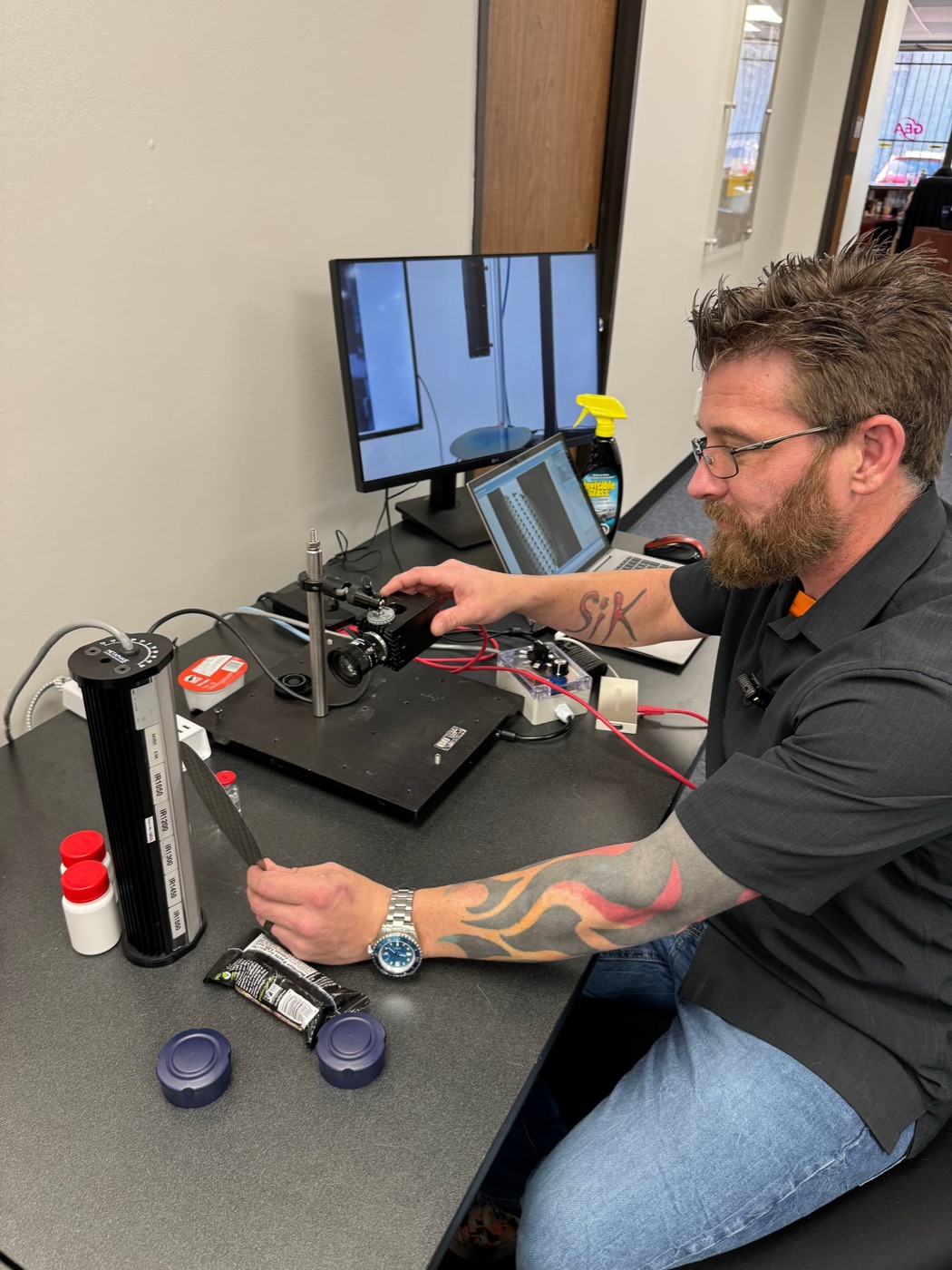
A controlled test using representative parts and realistic conditions is often the fastest way to reduce risk. Agree on the acceptance criteria before testing so everyone knows what success means.
Common questions
Can one vision system perform several inspections?
Often, yes. The practical limit depends on image resolution, cycle time, part presentation and the complexity of each inspection. Those requirements should be evaluated together during application testing.
What information is most helpful for an initial review?
Bring representative parts or images, line speed, field of view, smallest defect or feature, working distance, environmental conditions and the required machine response.